
April Showers bring more than Flowers! How to Keep Water Out this Spring:
SPRING IS HERE!
How to keep the water it brings OUT!
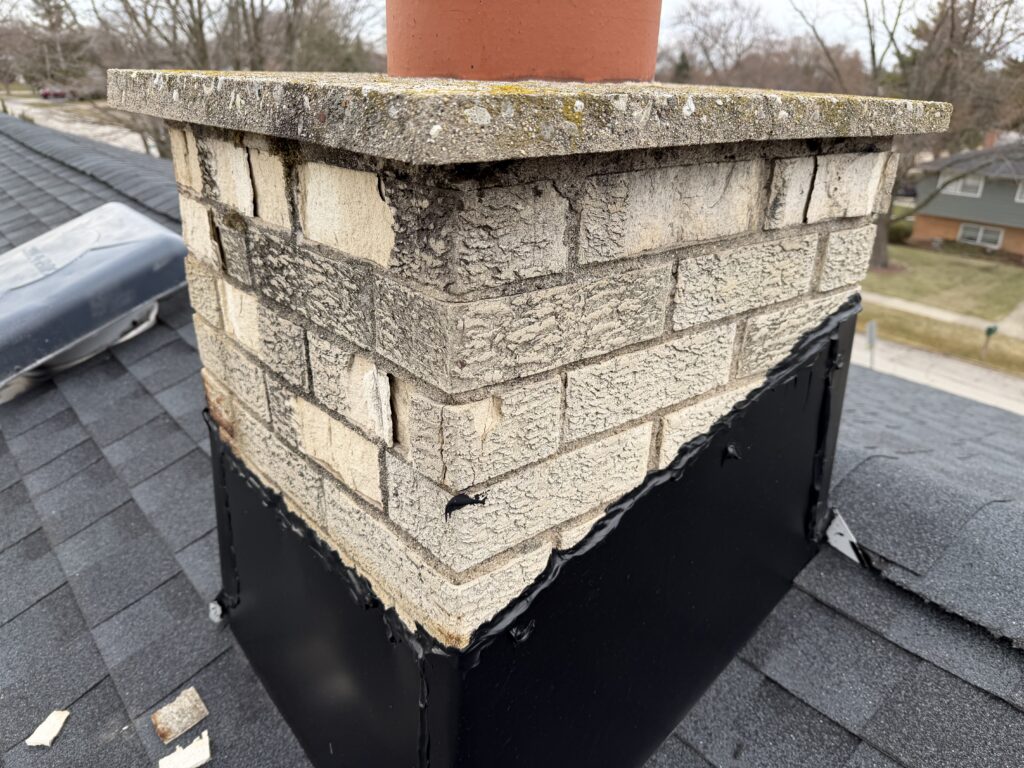
As a community we are transitioning into a very sporadic wet weather season, your chimney may become victim to the harsh rains and wind that come along. As a whole your masonry chimney acts as a large sponge sitting on the side of your home. Your chimney is so absorbent that each brick can absorb up to 2 cups of water! Water can begin to find its way through gaps, cracks, and voids along the path of least resistance until it finds a place to settle. Water that gets trapped may lead to leaks inside your fireplace or home, brick faces falling into your yard or sitting on the roof. You may even notice cracking that was not there last year.
Unfortunately, water leaks seen in your home could indicate that water has gotten through not only your masonry, but some structural elements in between. Through our experience, we have listed some tell-tale signs you may have water intruding.
- Peeling or stained paint on drywall or plaster either on the ceiling or wall next to your chimney/fireplace
- Vertical staining within your fireplace (firebox)
- Dripping noises heard within or near your fireplace (firebox)
- Cracking or spalling on the face of your fireplace (if masonry/tile)
- Wet carpet or flooring directly in front of or next to your fireplace
- Wet basement floors/flooding around the base of your chimney
- Black staining on the exterior of your chimney
- Efflorescence or white powder noticed anywhere on the chimneys masonry
Now you may be asking yourself, how can a leaky chimney be repaired?
In most scenarios a leaky chimney may be solved by topical forms of repair like waterproofing, sealants, and/or products like chimney caps to help keep water away. If the chimney’s structure has been compromised to a greater level, masonry repair involving tuckpointing, a new crown pour, or even a rebuild may be necessary. This is why it is vital to your chimney system’s health to have your chimney inspected annually, even if you do not regularly use it, to ensure you don’t get stuck with large masonry repair costs or major water intrusion.